

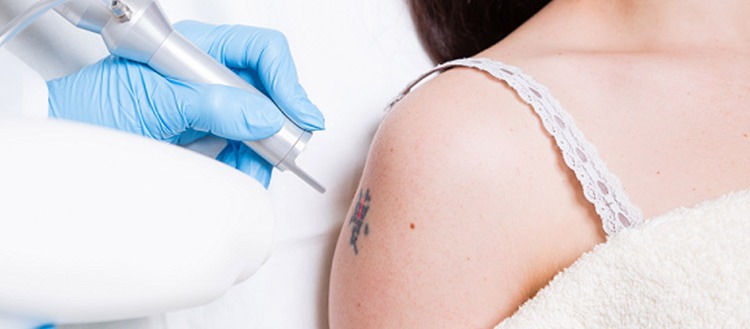
The answer is actually much simpler than you think. It really depends on what kind of tattoo you have, where it is located, how old it is and how thick it is. How does laser tattoo removal work for tattoos on your arm, legs or any other part of the body? Basically, the body’s natural immune response tries to slowly fade away a tattoo over time while it chips away the offending pigments under the skin.
Because tattoos are typically applied with a needle which punctures the skin and deposits ink deep within the dermal layer, it requires multiple treatments spaced apart to achieve results. As with any other type of cosmetic procedure, laser removal requires sessions rather than one time. In fact, if a single session does not completely remove the tattoo, then additional sessions may be required until the body adjusts to the new environment. This process can take several months, depending on the location and how thick the ink is. Since most tattoos are comprised of multiple colors, it can take several sessions before noticeable results are visible.
However, once a session has finished, the body must be allowed to adjust to the new surroundings in order for the ink to be fully removed. Part of this process involves removing small patches of the tattoo using lasers. The lasers used for this treatment only target the ink underneath the surface of the skin. What happens is that the tiny bits of ink that remain can be broken down by the immune system into smaller pieces which can be excised with laser excision procedures. The smaller pieces are also usually not noticed immediately and will not cause pain or discomfort.
The break down of the ink causes the structure of the skin to change and form new layers. Small scars are formed as the ink is broken down and eliminated from the body. As each layer is formed, the intensity of the laser beam is reduced slightly so that the skin can be further protected. While the entire process may seem very complicated, it actually uses a very simple set of rules that makes it easy to complete.
The first step involves treating the area with an anesthetic agent. This prevents any discomfort or pain that may occur during the treatments. Once the skin has been prepared, the physician uses a special type of laser to break down the ink particles. These particles, also called “spiders”, can damage the skin if they are permitted to stay around after the laser treatments have been performed. For this reason, the physician must carefully perform all necessary procedures before allowing the tattoo ink to leave the skin. The doctor usually applies anesthetics on the area so that you do not feel any discomfort while the treatment takes place.
Once the laser treatment has been completed, the physician covers the area with sterile equipment that will prevent any type of infection from occurring. To ensure the ink is completely removed, he may also use an antiseptic cream prior to the treatment. This helps to ensure that no traces of the ink will be left on the treated area. The entire process normally takes just about two to three hours, but the time can vary depending on the type of laser treatment used and on the ink being used.


Leave a Reply